

A marketing plan organises activity over time. A market thesis states which customer, in which situation, should choose you over their current alternative, and what evidence would show that belief is wrong. Strong businesses need both, and should let the second change the first.
There is a peculiar comfort in a complete marketing plan. Every month has a campaign. Every channel has a budget. Every task has an owner. A presentation becomes more persuasive as its empty spaces disappear. It can look like a business in control of its future.
And yet the plan may contain no defensible explanation of how the business expects to win.
That is the distinction I want to make between a marketing plan and a market thesis. A marketing plan organises decisions and activities over time. A market thesis is an explicit, testable belief about a market: which customers have which unresolved problem, what alternative they use today, why our offer deserves to be chosen, and what evidence would persuade us that the belief is right or wrong.
The distinction does not make planning unimportant. It makes planning answerable to a more demanding question.
Activity is measurable before it is meaningful
Marketing departments are unusually good at making work visible. They can report articles published, campaigns launched, impressions purchased, keywords targeted, leads generated and meetings booked. Much of that information is necessary. None of it, by itself, tells us whether the firm has found a persuasive reason to be chosen.
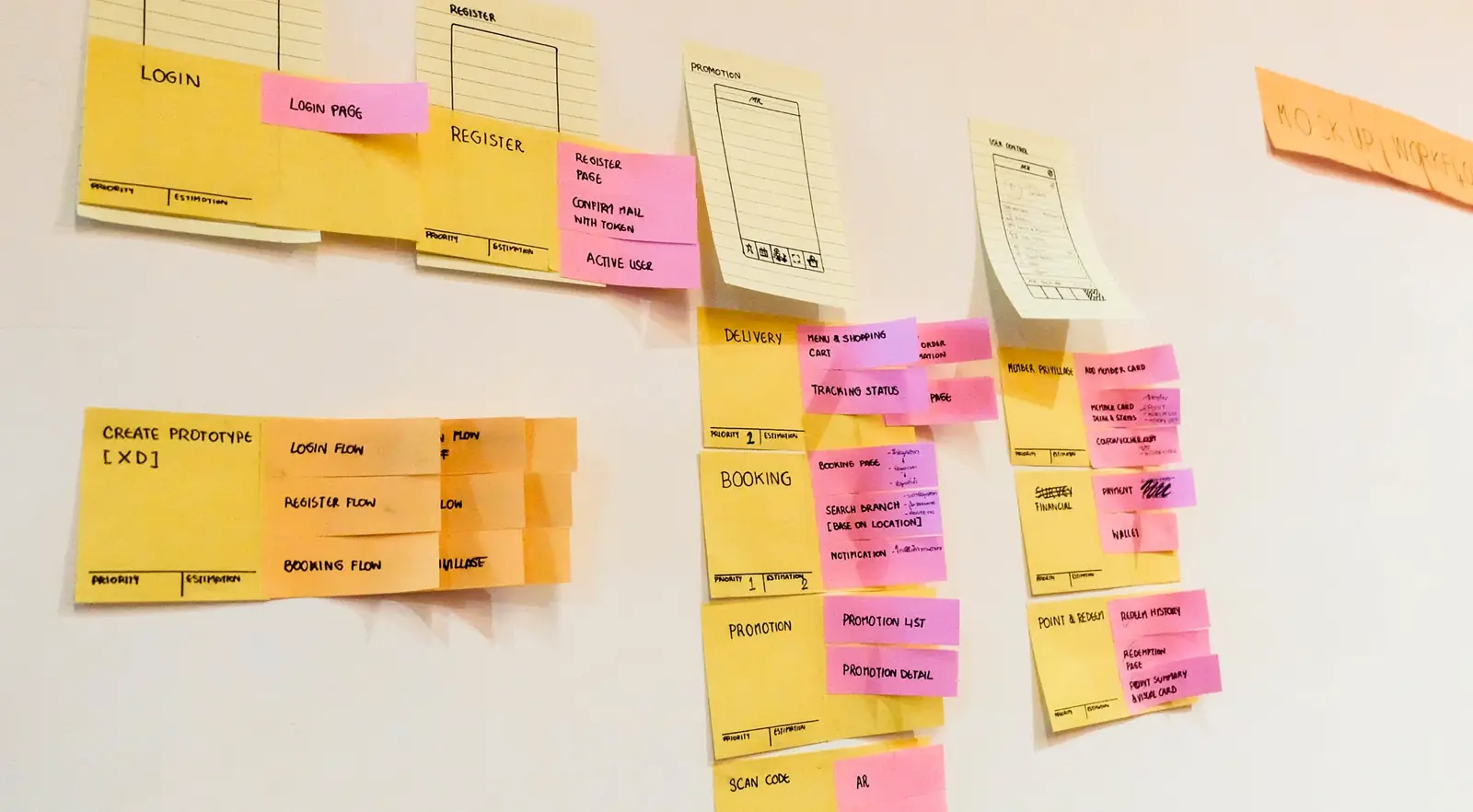
Imagine a hypothetical specialist service business. Its annual plan promises more thought-leadership articles, a refreshed website, paid-search expansion and a series of executive webinars. The plan is fully costed. But ask who those efforts are designed to change, what that audience currently believes, and why its buying criteria should move in the company’s favour. The answers become vague.
This is not a failure of effort. It is a missing theory of demand.
A market thesis makes an assumption visible before the organisation spends money behaving as if it were a fact. For example: Mid-sized firms facing unpredictable internal hiring costs will consider a managed external team, provided the offer gives them operational visibility and clear decision rights rather than merely a lower hourly rate. This is not established truth. It is a proposition to investigate. Its value is that it tells us what to look for: the jobs buyers need done, the risks they fear, the alternatives they compare, and what proof would change their minds.
Without that proposition, a team can optimise the wrong story with impressive efficiency.
What the annual plan promises
- More thought-leadership articles
- A refreshed website
- Paid-search expansion
- A series of executive webinars
Fully costed, and every line can be delivered. None of it says who should change their mind, or why.
What the thesis proposes
Mid-sized firms facing unpredictable internal hiring costs will consider a managed external team, provided the offer gives them operational visibility and clear decision rights rather than merely a lower hourly rate.
- The jobs buyers need done
- The risks they fear
- The alternatives they compare
- What proof would change their minds
Not established truth. A proposition that tells the team what to look for.
Strategy begins with a choice, not a schedule
Roger Martin’s strategy work distinguishes a coherent set of choices about where to play and how to win from a collection of planned activities. In a 2023 Harvard Business Review discussion, Martin argues that planning often collects initiatives without explaining the integrated advantage those initiatives are meant to create.1
A market thesis is not identical to an organisation’s entire competitive strategy. It sits within that strategy. It takes the commercial side of the argument and makes it concrete enough to guide research, positioning, targeting and evaluation.
The useful questions are uncomfortable precisely because they constrain freedom:
- Who specifically? Not “SMEs” or “decision-makers,” but a meaningful group with a shared buying situation.
- Why now? What changed, or what recurring problem became costly enough to act upon?
- Compared with what? Another provider, an internal team, a spreadsheet, inertia or doing nothing?
- What is the advantage? An economic, functional, emotional or operational reason that a buyer can recognise.
- What must be true? The conditions without which the thesis collapses.
- What would disprove it? Evidence that triggers a change rather than another round of more intense promotion.
A campaign calendar cannot answer those questions for us. It can only deploy the answers we have chosen.
The buyer’s world is not arranged around our departments
One of the more useful traditions in marketing research is the idea of market orientation. Narver and Slater’s 1990 work treated customer orientation, competitor orientation and coordination across functions as components of a market-oriented organisation.2 The research linked its particular operational measure to profitability in its study setting; that is not a universal formula for commercial success. The durable conceptual point is that market understanding cannot live solely inside the marketing department.
Consider what happens when a company promotes speed, but onboarding is slow. Or when the commercial message promises senior attention, but delivery depends on an invisible handoff. Or when sales offers bespoke flexibility while the operation has been designed for standard packages.
The advertised proposition and the experienced proposition diverge. No amount of copywriting removes the contradiction.
A serious market thesis therefore travels across the organisation. Sales must explain how buyers compare alternatives. Delivery must explain which promises it can keep. Finance must explain where attractive demand becomes unattractive economics. Customer-facing colleagues must report where expectation and reality part company. Management must choose which opportunities to decline.
This is the first interdisciplinary implication: a market thesis is part marketing strategy, part organisational design. It concerns not only what buyers want, but whether the business is built to deliver the reason it asks to be chosen.
Search demand is not necessarily market demand
Digital marketing introduces another confusion. A keyword can have search activity without representing a valuable buying situation. A campaign can generate qualified-looking inquiries that never become customers. A content series can attract professional peers who appreciate the argument but have no intention to buy.
There are several layers that should not be collapsed:
Information demand is the desire to learn about a problem. Solution demand is the search for possible ways to address it. Supplier demand is consideration of a provider. Economic demand includes a willingness and ability to commit resources. People move between these states imperfectly, sometimes not at all.
- Information demandthe desire to learn about a problem
- Solution demandthe search for possible ways to address it
- Supplier demandconsideration of a provider
- Economic demanda willingness and ability to commit resources
A keyword or a campaign can be strong at one layer and silent at the next.
A market thesis specifies which transition matters. It may say that useful, independently verifiable explanations will reduce uncertainty among buyers who are already comparing providers. Or it may say that a firm must first help buyers recognise a problem they have misdiagnosed. Those are different mechanisms and call for different marketing.
This is also where SEO reporting becomes strategically interesting. Rankings and clicks can show discovery; they do not automatically establish trust, preference, purchase intention or profitable retention. They are evidence about parts of a journey, not an answer about the journey as a whole.
Make the thesis falsifiable enough to matter
There is a danger in the phrase market thesis: it can sound academic while simply renaming management instinct. To avoid that, give the belief a way to fail.
A practical record could contain five parts:
- Buyer and situation. Who is making the decision, under what constraints, with what urgency?
- Current alternative. What do they use, tolerate or postpone today?
- Proposed advantage. What change in cost, risk, convenience, status, confidence or performance is credible?
- Evidence ladder. What would count as weak interest, strong consideration, a successful commercial commitment and retained value?
- Revision trigger. What result would cause us to change the segment, proposition, channel or operating promise?
This is an editorial working method, not a named or scientifically validated framework. It is deliberately plain because the challenge is not in inventing terminology. It is in making the organisation’s beliefs inspectable.
A firm might find that its preferred audience appreciates a service but cannot justify the fee. That is not merely a messaging problem. It might find that customers value predictability more than technical sophistication. That finding could change the offer itself. It might discover that its most profitable segment is smaller and less glamorous than the one it has been chasing. That is exactly the kind of evidence a plan should be able to absorb.
A plan can succeed while the thesis fails

Suppose a team achieves every planned output: the articles are live, paid media is delivered, the conference is attended, leads are followed up and reporting is punctual. Management can reasonably praise the execution. It should not assume that the commercial argument has been validated.
Equally, a thesis can be promising while an execution plan fails. Perhaps the buyer problem is real and the proposition persuasive, but the website is weak, sales response is slow or service capacity is constrained. Strategy and execution are distinct; they are also dependent.
Thesis fails
This distinction prevents an unfair habit in business: blaming people for disappointing outcomes without first examining whether the underlying assumptions were sound.
What should appear on the first page?
Before the campaign calendar, present one page that says:

THE FIRST PAGE
We believe [a specific customer] in [a specific situation] will choose [this proposition] over [their current alternatives] because [a defensible advantage]. We expect to observe [specific leading and commercial signals]. We will reconsider the belief if [specified contrary evidence] appears.
TRY IT WITH YOUR OWN BUSINESS
We believe in will choose over because . We will reconsider if .
What you type stays in your browser. Nothing is sent or saved.
That sentence is not the whole strategy. It is the discipline of revealing where the strategy can be challenged.
Then build the plan. Allocate budgets. Write the briefs. Choose the channels. Design the experiments. Create the operating commitments. Measure what happens.
A marketing plan can tell you whether the organisation did what it intended. A market thesis helps it learn whether it understood the market in the first place. The strongest businesses need both, and should be willing to let the second change the first.