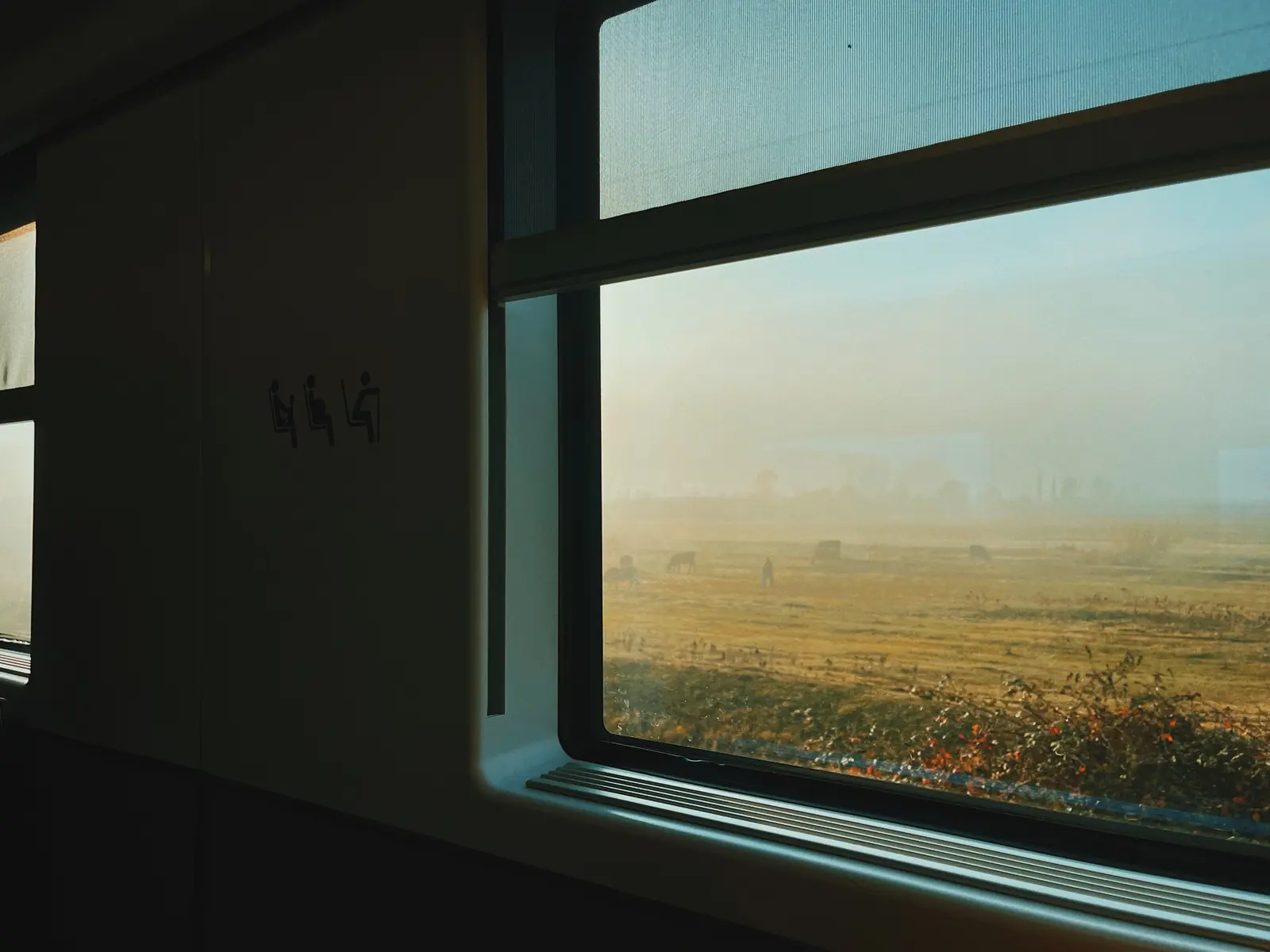
Without Arrival · a reflection
A Journey Is Not a Collection of Checkpoints
On the difference between reaching a place and allowing it to exist beyond our plans for it.
It is possible to return from a journey with a remarkable account of everything that was completed, and a less certain account of what was felt.
The landmarks were visited. The restaurants were found. The familiar photographs were taken from almost the correct angles. There are tickets, receipts, dates, locations and perhaps a small private satisfaction in having used the time well.
Nothing about this is wrong. A journey requires arrangements. Some places cannot be reached casually. Some experiences ask for planning, patience and money. There can be real pleasure in finally standing somewhere one has wanted to be for years.
Still, a question remains after all the plans are fulfilled: was the journey simply a collection of successful arrivals?
The habit of measuring a day by what it contains has become so ordinary that we rarely notice when it follows us away from work. We carry the logic of the checklist into places that do not know we have a checklist. A street is supposed to reveal its character before lunchtime. A meal should justify its recommendation. A view is expected to be memorable on command.
We ask a place to become an experience before we have allowed it to be a place.
A checkpoint is a useful thing. It tells us whether we are on the right road. It protects against losing our way. It can make the unfamiliar manageable. But a checkpoint does not explain the meaning of a journey. It only confirms that one point has been reached.
The difference is subtle and easily lost. A person can stand before an extraordinary building and be occupied almost entirely with the question of where to go next. Another person can sit for an uneventful hour in an ordinary square and become absorbed in the arrangement of daily life. Neither response is morally superior. Neither can be prescribed. But they are different ways of giving attention.

Travel writing often rewards the exceptional. The hidden place. The unforgettable encounter. The moment that changed everything. It may be less comfortable to admit how much of being away consists of ordinary intervals: waiting, walking without certainty, noticing a door close, hearing speech that is not addressed to us, discovering that the afternoon is not asking to be productive.
Perhaps those intervals are not the spaces between the experiences. Perhaps they are part of the experience itself.
There is also a quiet possessiveness in the language of visiting. We speak of doing a city, covering a region, collecting destinations. The verbs turn places into objects of accomplishment. They suggest that enough movement can amount to understanding.
But places do not become known merely because they have been traversed. A neighbourhood may have histories that are invisible to a passing visitor. A local custom can be interpreted incorrectly, especially by someone eager to find meaning. The stories people live are not automatically available for our enrichment. Attention, when it is genuine, must leave room for the possibility that we do not understand what we have seen.
This is one reason the idea of being a guest feels more demanding than the idea of being a traveller. A guest enters a world already in progress. The place does not begin with the guest’s arrival, and it does not end with the guest’s departure. Its people have their own concerns, pleasures and disagreements. What appears atmospheric to an outsider may be ordinary work to somebody who lives there.
To remember that is not to travel without curiosity. It is to practise curiosity without ownership.
Schedules are sometimes necessary for kindness as well as efficiency. They help groups move together, protect other people’s time and make difficult journeys possible. The invitation is not to become careless with time or dismissive of practical arrangements. It is simply to resist the temptation to mistake the arrangements for the encounter.
The same mistake appears outside travel. A conversation becomes something to finish. A book becomes something to complete. A friendship becomes an obligation to maintain at acceptable intervals. Even rest can be turned into a project whose success must be demonstrated afterward.
Perhaps we have become skilled at describing movement and less certain how to describe presence.
There is no clear test for whether one has been present enough. Trying to invent one would reproduce the very problem. Five minutes of attention cannot be compared neatly with five days of activity. A carefully planned visit may reveal something profound. An improvised afternoon may reveal nothing at all. Slowness is not automatically wisdom, and being unhurried is not always a privilege everyone can afford.
What can be questioned is the assumption that a journey owes us a return proportionate to its cost, distance or difficulty. Sometimes the expected wonder does not appear. Sometimes a place resists the story we wanted to tell about it. Sometimes the strongest memory belongs to an interval that was not important enough to enter the itinerary.
Such memories may be difficult to explain because they have no obvious achievement attached to them.
Maybe that is why they remain with us.
A journey does not have to change a person. It does not have to produce a new philosophy or a more enlightened self. Those demands can become another kind of destination, another way of declaring the time worthwhile.
It might be enough, on occasion, to return without having turned every hour into evidence.
The checkpoints will still be there. We may remember them accurately: the names, the dates, the sequence in which they came. But somewhere between one destination and the next is the part of the journey that cannot be checked off.
And it is possible that we will recognise it only after we have stopped trying to arrive.
First published